



Heat loss through your garage door: how can you reduce it?
Draughts, cold panels, condensation: learn how to pinpoint heat loss through your garage door and decide whether to adjust, repair or replace it.
Does your garage stay cold even when the door is closed? Can you feel a draught near the threshold or see condensation on the panels? These signs may indicate inadequate insulation or poor sealing.
To reduce heat loss through your garage door, you first need to identify the cause. We explain how to inspect the door leaf, seals and closing mechanism, then determine whether an adjustment, repair or replacement is appropriate.
Spot the signs of heat loss
Start by inspecting the door when it is fully closed. A draught in one area, a noticeably colder spot or a visible gap around the door curtain may indicate a sealing issue. If the entire surface feels cold, this may instead suggest that the panels provide insufficient thermal insulation.
The main signs to look out for are:
- draughts around the sides or at the threshold;
- very cold panels or internal wall surfaces;
- condensation on the door curtain or near the joints;
- a bottom seal that is crushed, split, detached or incomplete;
- damaged side seals;
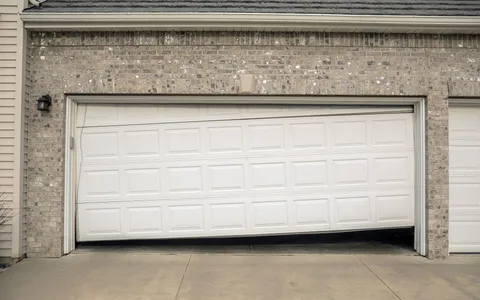
- an uneven gap between the door and its frame;
- a door that appears not to close fully or evenly.
Carry out this visual inspection without removing any parts. If the door rubs, closes unevenly, makes an unusual noise or meets resistance, do not force it: the issue may involve more than just the seals.
Garage door heat loss: insulation or sealing?
This distinction helps avoid carrying out the wrong repair. Insulation mainly refers to the ability of the door leaf and its panels to limit heat transfer. Airtightness depends on the contact between the door, its seals, the threshold and the frame.
Identifying inadequate door insulation
If the entire inner surface feels fairly uniformly cold, the door curtain may be the cause. The cold is then not confined to an edge or joint. The overall condition and design of the door should be assessed to determine whether a targeted improvement is still appropriate.
On a sectional door, also visually inspect the joints between the panels. Localised heat loss in these areas may be caused by the seals between the sections rather than by the door leaf as a whole.
Identifying a perimeter seal fault
A draught concentrated at the bottom often indicates poor contact between the bottom seal and the threshold. Along the sides, an uneven gap may indicate a worn seal or a door that no longer closes flush against the frame. The issue may also be between the panels of a sectional door.
Condensation is an indicator, but on its own it is not enough to identify the cause. It should be considered alongside the location of cold spots, the condition of the seals and how well the door closes.
What checks and repairs should be considered?
A damaged seal can no longer perform its function properly. Check its condition around the entire perimeter for cracks, deformation, detachment or missing sections. The threshold must also ensure consistent contact when the door is closed.
The technician can determine whether the fault lies with the seal itself, its positioning or the closing mechanism. Depending on the diagnosis, the work may involve replacing a worn part, adjusting the door or altering the closing settings. On a motorised door, an incorrectly set travel limit can also prevent the door from closing properly.
A garage door repair can therefore reduce heat loss through the garage door when it is caused by worn seals, poor contact or misalignment. We work on sectional, up-and-over, roller and side-hinged doors from the vast majority of brands.
Some checks are straightforward: inspect the seals, look for any gaps and describe how the door is operating. However, never attempt to remove or adjust a spring, cable or any component under tension yourself. A misaligned door, frayed cable or panel that has come out of its track requires a technician.
When should you replace the door rather than repair it?
Repair is the sensible option when heat loss is caused by a localised issue that can be fixed, such as a damaged seal, poor closure or incorrect adjustment. This allows the door to be retained if its door leaf and overall operation remain suitable.
Replacement becomes the better option when cold air passes through much of the door curtain, several areas are defective, or the door’s overall condition makes isolated repairs less worthwhile. An old or damaged door may combine inadequate insulation, worn seals and uneven closing.
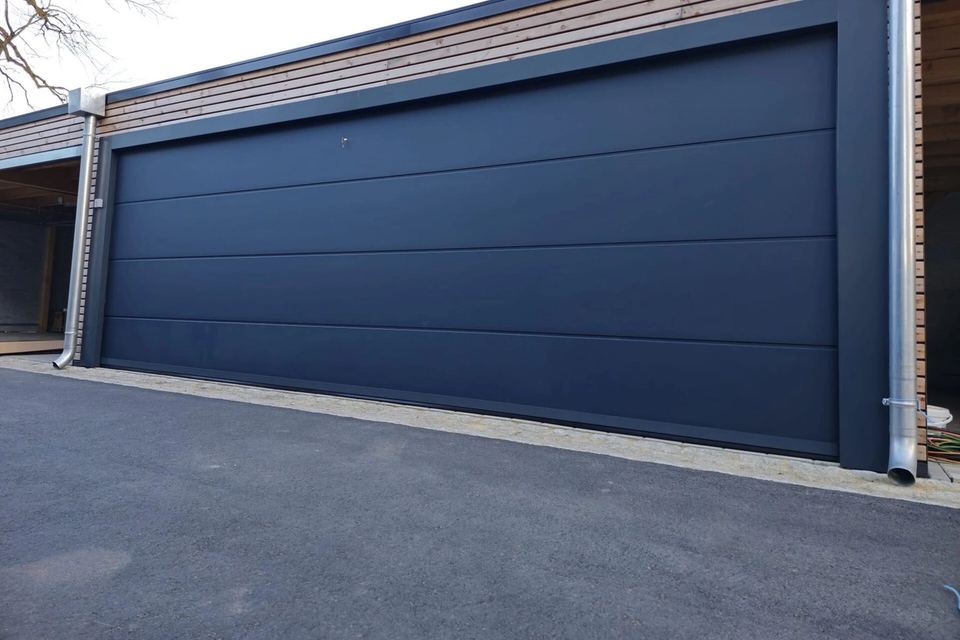
The choice should take into account the garage layout and the type of opening. We install Hörmann sectional, up-and-over and roller garage doors, custom-configured to suit your requirements. The aim is to select a better-insulated door and ensure it is properly fitted, with consistent contact along the threshold and sides.
An on-site assessment allows the two options to be compared with confidence. It determines whether the heat loss can be addressed by replacing the seals and making adjustments, or whether it is mainly due to the door panel.
Arrange an assessment in Luxembourg
Before our visit, please let us know the type of door, its make if known, and the exact location of any draughts or condensation. If possible, include photos of the seals, threshold and joints between the panels. This information will help us identify the fault.
Founded in 2007 and based in Sandweiler, Fermé-Lux is a family-run company serving 7 cantons of Luxembourg. We provide diagnostics and repairs and, where appropriate, replacement with a made-to-measure Hörmann garage door. Request a call-out or quotation to receive a proposal tailored to the actual condition of your door.
Frequently asked questions
How can I check whether heat loss through the garage door is coming from the threshold?
With the door closed, check for draughts along the bottom and make sure the bottom seal is in even contact with the threshold. A compressed, split, loose or incomplete seal may be causing the heat loss, but an incorrectly adjusted closing mechanism can also prevent the seal from making proper contact.
Can a garage door opener cause the garage door to no longer seal properly?
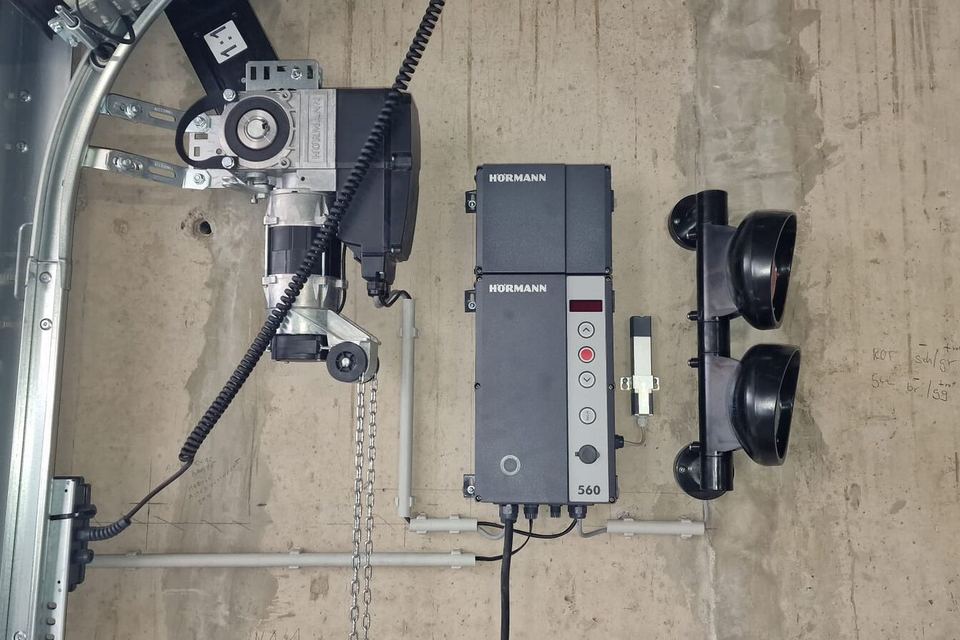
Yes, an incorrect travel limit setting can prevent a motorised door from closing fully and allow draughts through. A technician can check whether the problem lies with the settings, the drive mechanism, the motor unit or an accessory obstructing closure, such as misaligned photocells.
What information should I provide to have heat loss through my garage door assessed?
Please specify the type of door, its make if known, and exactly where you are experiencing cold, draughts or condensation. Include photos of the seals, threshold and joints between the panels, as well as a short video of the door closing if possible; this will help the technician prepare their assessment.