





How to replace a garage door motor safely
Find out when to replace a faulty motor, how to choose a compatible drive system and why installation and adjustments are best left to a technician.
Your door no longer responds, stops partway through opening or closing, or makes an unusual noise. Should you repair the automation system or replace the garage door motor? And how do you choose compatible equipment without compromising safety?
We explain how to tell whether a fault can be repaired or the motor needs replacing, what to check and what professional installation involves. The aim is to restore reliable automatic opening suited to your garage door and how you use it.
Repair or replace the garage door motor?
A motor that is silent or does not move is not necessarily faulty. The problem may be caused by an unrecognised remote control, a backup battery, a receiver, a push button or misaligned photocells. The travel limit settings may also be responsible.
Other faults may directly affect the drive system: a worn motor pinion, a control board damaged after a storm, a chain or belt drive problem, or a faulty motor unit. On an industrial installation, overheating, a worn manual release mechanism or a variable-speed drive fault can also disrupt operation.
Signs that call for a diagnosis first
You should arrange an inspection if you notice any of the following:
- an unusual noise coming from the motor or track;
- no response despite a working control;
- repeated stops during opening or closing;
- irregular movement of the chain or belt;
- limit switches that no longer match the door positions;
- overheating of an operator subjected to intensive use.
A diagnosis will pinpoint the cause before any decision is made. If an accessory, adjustment or replaceable part is all that is needed, the motor unit can be retained. If the motor itself is faulty, or if the operator is no longer suitable for the door and how it is used, replacement is the appropriate solution.
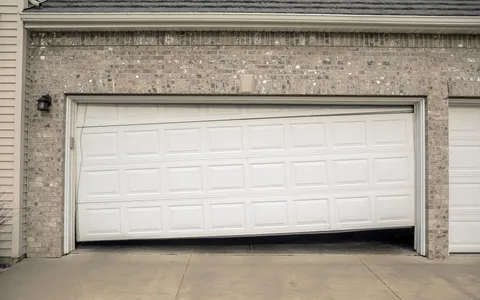
Never force a jammed door. Do not attempt to dismantle or adjust a spring, cable or any component under tension yourself. A broken spring, frayed cable or panel that has come out of its track may appear to be a motor fault, when the problem is actually mechanical and poses a safety risk.
Choosing a motor compatible with the door
A motor should not be chosen simply because it can be fitted in the garage. Its compatibility depends on the type of door, its dimensions and weight, and how often it is used. These criteria determine which solution can operate the door correctly without placing it under undue strain.
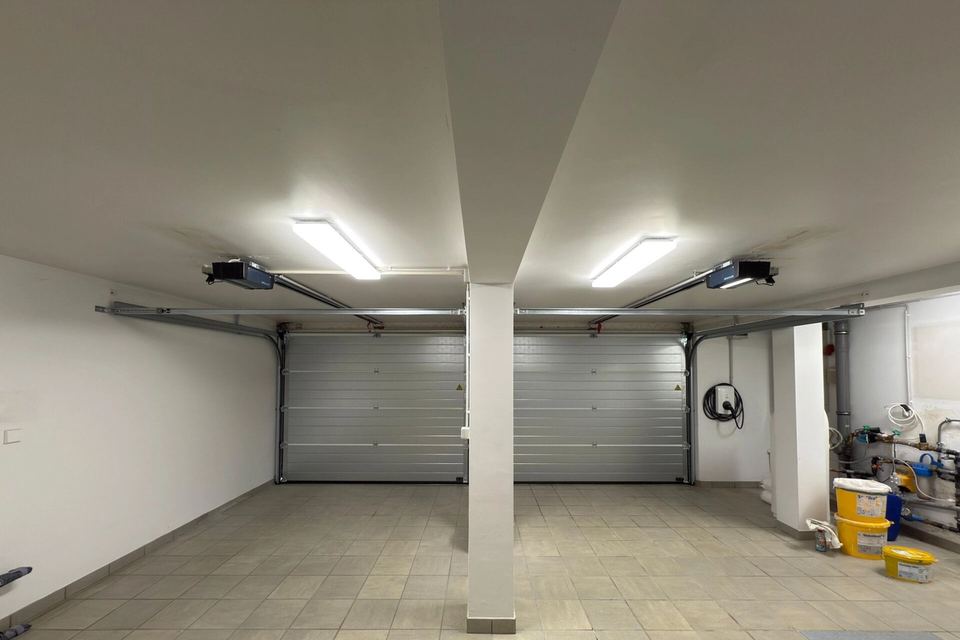
The configuration varies depending on whether it is a sectional, up-and-over, roller, side-sliding or industrial door. The technician also checks the headroom, guide rail and existing drive system. For commercial premises, the frequency of use is also taken into account.
Domestic and industrial use: different needs
For homes, Fermé-Lux installs Hörmann operators including ProMatic, SupraMatic E and SupraMatic P. The choice depends on the type and size of the door and how often it is used. The system can also be equipped with remote controls, a code keypad, photocells, a backup battery or smartphone control via BlueSecur.
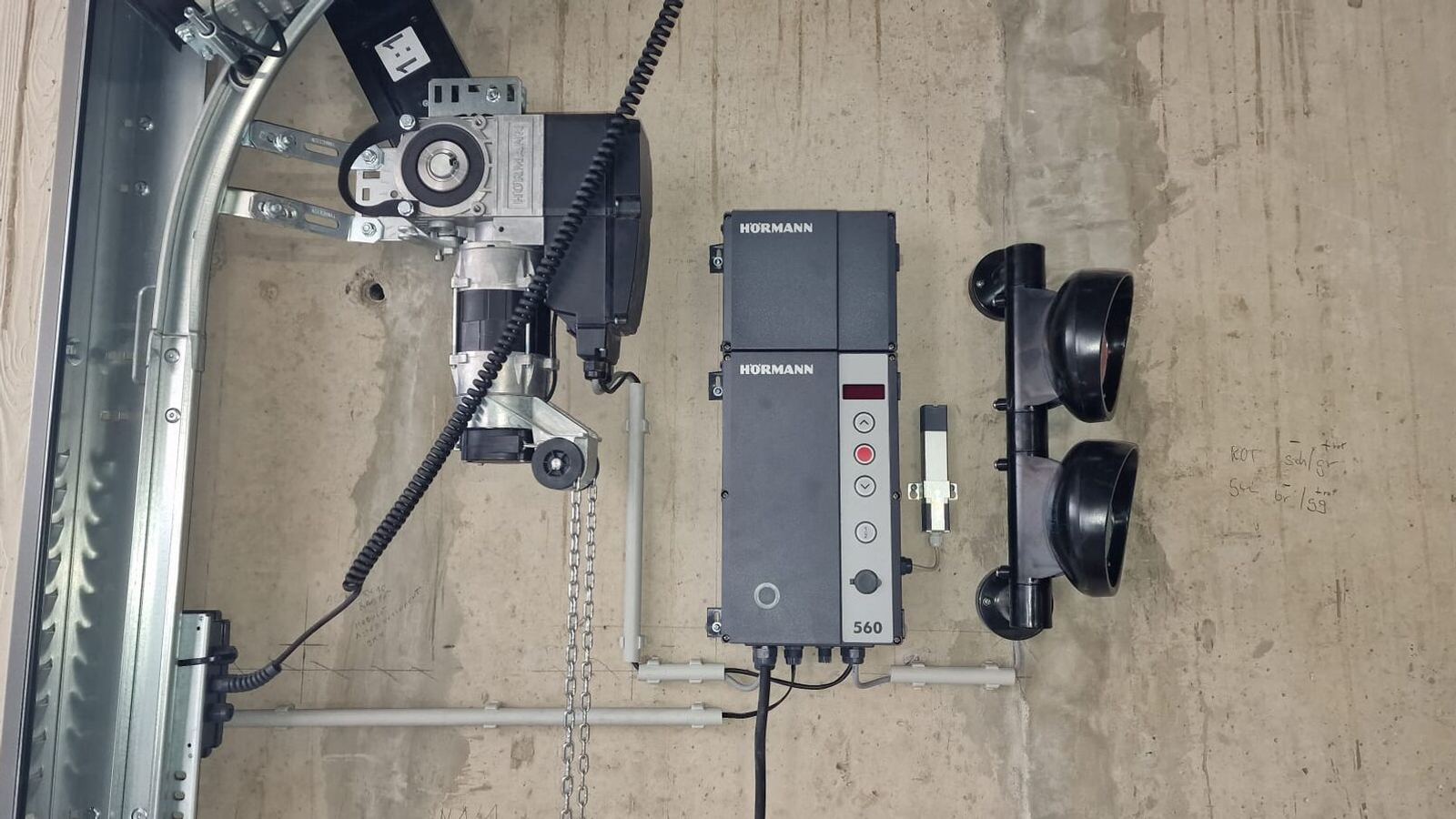
Industrial doors may require a chain drive with a track, a shaft-mounted drive or a direct drive. The choice must take account of the door configuration and the site's intensive use. Control and detection devices, such as warning lights, induction loops or radar sensors, must be compatible with the overall system.
Our garage door automation service can replace the motor on a garage door once we have checked that it is compatible with the entire system. We also work with the vast majority of brands to diagnose existing installations.
Steps for a safe replacement
Replacement is not simply a matter of removing one unit and connecting another. The door, drive system, controls and safety devices form a single system. Professional installation therefore involves several stages.
- Inspect the door and identify the fault. The technician checks whether the fault lies with the motor, control board, chain, belt, limit switches or an accessory. They also check the door for any mechanical faults.
- Determine the compatible motor system. The door type, weight, dimensions and frequency of use are taken into account, along with the track configuration and drive mechanism.
- Make the installation safe. The power supply and relevant components are made safe before removal. Springs, cables and other parts under tension must not be handled by the user.
- Install the motor and connect the controls. The technician installs the appropriate motor, then connects the remote controls, receivers, push buttons and any other accessories.
- Set the travel limits and safety devices. The open and closed positions are calibrated. The sensors and photocells are checked and adjusted if necessary.
- Carry out full testing. Several operating cycles are tested to check that the door moves smoothly, stops in the correct positions and that the safety equipment works properly.
These checks prevent a new motor from masking a mechanical fault. They also ensure that the door moves correctly before it is put back into service.
Why entrust installation and testing to a technician?
An operator moves a heavy door containing mechanical and electrical components. An error in compatibility, installation or adjustment can cause erratic movement, prevent the door from stopping in the correct position or disable a detection device. Safety testing is therefore far more than a formality.
The technician checks the entire drive mechanism, adjusts the travel limits and calibrates the photocells. They also check the remote controls, manual release and connected accessories. For an industrial door, recommissioning must also comply with the applicable Luxembourg regulations.
Replacing a garage door motor does not automatically cost €5,000. The price depends on the fault identified, the compatible motor, the configuration and any accessories that need to be retained or replaced. A diagnosis followed by a transparent quotation sets out the solution and its cost before work begins, without unnecessarily replacing components that are still working.
A family business founded in 2007 and based in Sandweiler, Fermé-Lux serves all seven cantons of Luxembourg. We are an official Hörmann partner and also repair operators from the vast majority of brands. To help us process your enquiry, please specify the type of door, its make if known and the issue you have noticed, and include a photo or video if possible. We can then arrange a diagnostic visit and provide a tailored quotation before carrying out the replacement.
What to know before replacing the operator
The right approach is simple: diagnose the fault, check the door’s mechanical condition, choose a compatible motor, then carry out the necessary adjustments and safety tests. This method allows for repairs where sufficient, with replacement only when the motor unit or its compatibility makes it necessary.
If your garage door is stuck, noisy or no longer responds, leave it as it is and do not force it. Request a call-out so our team can identify the cause and provide a detailed quotation before carrying out any work.
Frequently asked questions
Can a garage door motor be replaced without replacing the existing rail?
This depends on whether the new motor, guide rail and chain or belt drive system are compatible. The technician checks these components, as well as the door’s headroom requirements, before deciding which can be retained.
Will my remote controls and accessories still work after the garage door motor is replaced?
Remote controls, receivers, push buttons, photocells and other accessories must be checked for compatibility with the new operator. Compatible items are connected and tested; faulty or incompatible components must be replaced or reprogrammed as appropriate.
How can the door be operated during a power cut after the motor has been replaced?
The manual release mechanism allows the door to be operated during a power cut, provided it has no mechanical faults. A backup battery can also be fitted as a compatible accessory and checked during installation testing.